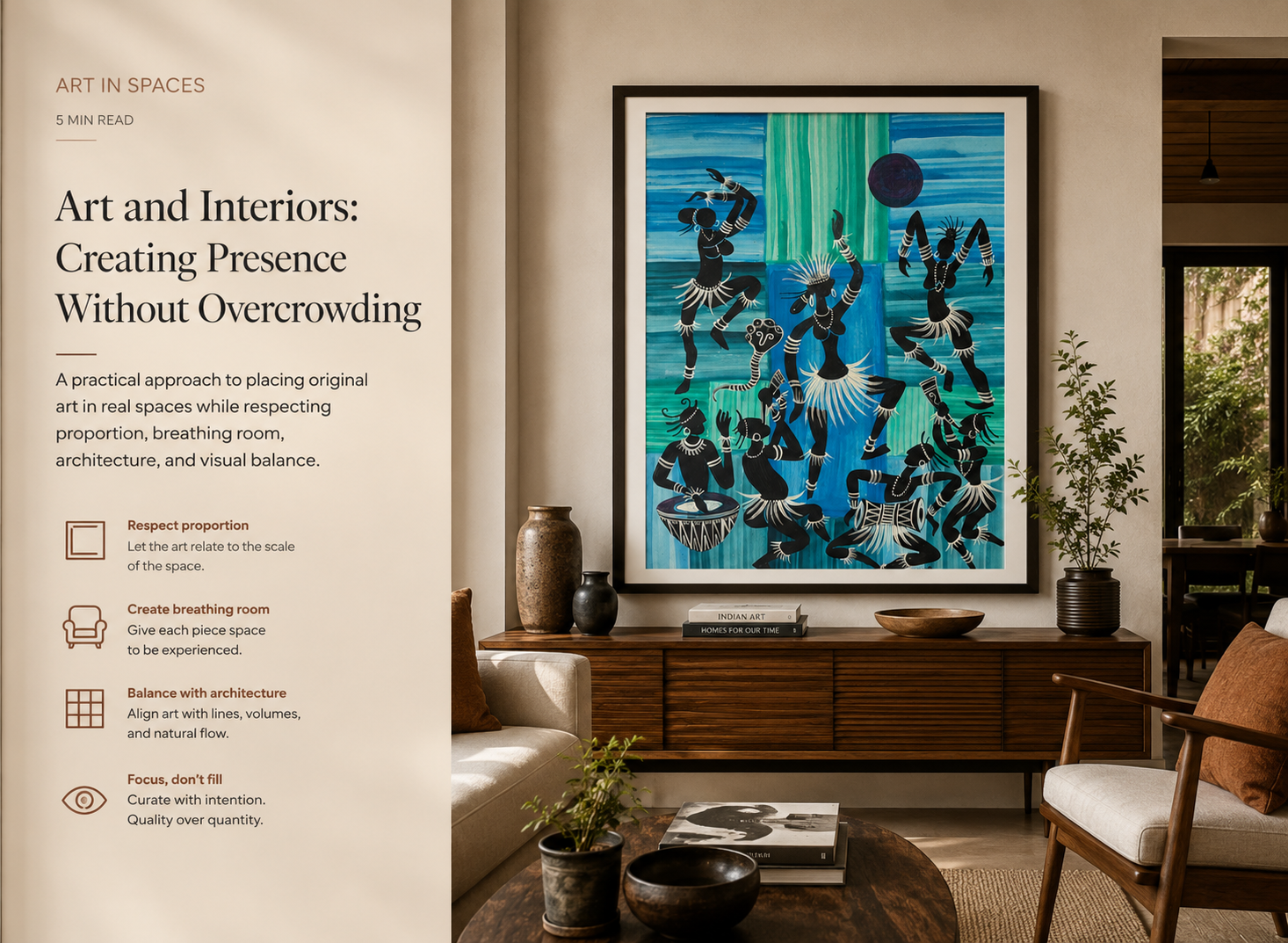
Presence comes from clarity—not from filling every wall
Original art can transform an interior, but the strongest impact often comes from restraint. A room does not need many artworks to feel cultured, expressive, or complete. It needs the right work, placed with confidence.
When art is introduced thoughtfully, it becomes part of the architecture. It can create focus, establish mood, connect different areas of a room, and add emotional depth without making the space feel crowded.
The aim is not to decorate every available surface. It is to create a balanced relationship between artwork, wall, furniture, light, and movement through the room.
“A room feels complete when the artwork has space to be seen.”Ceramic Raja Studio
A practical way to place art with balance
Read the architecture first
Notice the room’s strongest lines, openings, ceiling height, furniture placement, and natural focal points. The artwork should strengthen the architecture rather than fight against it.
Choose one clear visual anchor
A confident artwork can establish the identity of a room. Instead of distributing attention everywhere, allow one work to lead and let smaller objects support it quietly.
Respect proportion
The scale of the painting should feel connected to the wall and nearby furniture. A work that is too small may disappear, while one that is too large can overwhelm the room.
Create breathing room
Empty space is part of the composition. Leaving enough wall around a painting helps colour, form, and texture remain visible and prevents the room from feeling crowded.
Edit the surrounding objects
Accessories, books, ceramics, plants, and lighting should support the artwork without competing for attention. A few considered elements often create more impact than many decorative pieces.
Let architecture guide the first decision
Every room already has a visual structure. Doorways, windows, ceiling lines, wall proportions, furniture, and circulation create natural areas of attention.
Before selecting a wall, observe where the eye naturally travels when entering the room. A strong architectural line can support an artwork beautifully, while an awkward placement may make even an excellent painting feel disconnected.
Art feels most integrated when it strengthens the existing structure of the space rather than interrupting it.
One strong focal point can define the room
A large or visually expressive painting can become the emotional centre of a room. It may anchor a seating area, strengthen an entrance, or give identity to an otherwise neutral wall.
When one artwork leads, surrounding elements should become quieter. Furniture, lighting, ceramics, and plants can support the composition without demanding equal attention.
This hierarchy allows the room to feel intentional rather than busy.
Proportion creates visual confidence
Artwork should feel connected to the wall and the furniture below it. A small work placed alone on a wide wall may lose its presence, while a piece that is too large can make the room feel compressed.
Above a console, sideboard, sofa, or bed, the artwork often feels balanced when its width relates clearly to the furniture beneath it. Vertical works can strengthen narrow areas, while horizontal compositions can extend wider spaces.
The right proportion creates calm because the relationship between art and architecture feels resolved.
Breathing room is part of the composition
Empty wall around a painting is not wasted space. It allows the viewer to see the edges, colour relationships, texture, and overall form without interruption.
When artworks are placed too close to shelves, screens, strong patterns, or other framed objects, their visual impact is reduced. A clear margin around the work gives it dignity and presence.
Breathing room is especially important for detailed, colourful, or emotionally powerful paintings.
Colour should connect the room without becoming a formula
Artwork does not need to match every colour in the interior. A painting can introduce contrast, warmth, or a new visual energy while still feeling connected to the room.
A subtle relationship may come from one repeated tone, the warmth of the wood, the colour of a textile, or the metal finish of a nearby object. These connections are often more sophisticated than exact colour matching.
The aim is harmony, not uniformity.
Lighting should reveal—not overpower—the artwork
Soft natural light can bring out texture and depth, while warm evening light can create intimacy. Harsh glare or strong direct sunlight, however, can make viewing uncomfortable and may affect the work over time.
Picture lights or adjustable spotlights should be angled carefully so the entire surface is visible without creating bright reflections.
Good lighting supports the artwork quietly. It should make the work easier to experience without drawing attention to the lighting itself.
Curate with intention and edit with confidence
A room may contain several meaningful objects, but not all of them need to be displayed at the same time. Rotating smaller works and accessories can keep the space fresh without creating permanent visual density.
Editing is an important part of interior styling. Removing one nearby object may allow the artwork to become more powerful. Simplifying a shelf may improve the balance of the entire wall.
Presence is created not by quantity, but by thoughtful relationships.