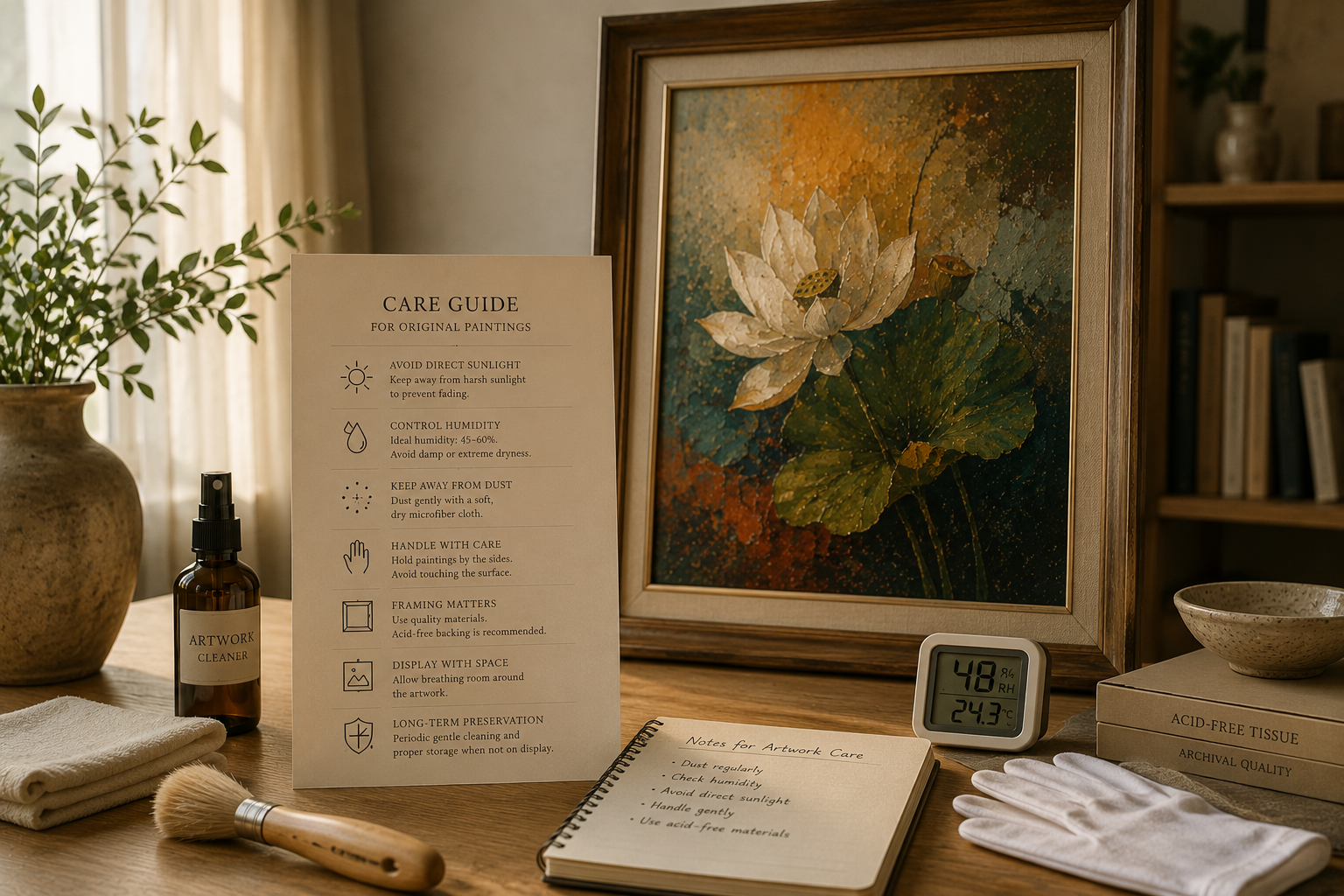
Original art is made to last—but it benefits from thoughtful care
A handmade painting can remain part of a family, home, or collection for generations. Most artworks do not require complicated maintenance, but they do respond to their surroundings.
Light, moisture, dust, handling, and framing all influence how gracefully a work ages. Small, consistent habits are usually more valuable than occasional intensive cleaning.
The goal is not to keep an artwork untouched or hidden. It is to display and enjoy it while protecting the materials from avoidable stress.
“The best care is quiet, regular, and respectful of the materials.”Ceramic Raja Studio
Five habits that protect an original painting
Choose the right wall
Select a place away from harsh direct sunlight, moisture, kitchen steam, air-conditioner vents, and areas where people may frequently brush against the artwork.
Maintain a stable environment
Original paintings age best in a reasonably stable indoor environment. Sudden changes in humidity and temperature can affect canvas tension, wooden frames, and painted surfaces.
Dust gently and infrequently
Use a clean, soft, dry microfiber cloth or a very soft natural-bristle brush. Never spray household cleaner, water, polish, or perfume directly onto the artwork.
Handle from the sides
Clean and dry hands are essential. Hold the frame or stretcher from both sides, keep fingers away from the painted face, and never lift a work using its hanging wire.
Inspect and respond early
Occasionally check the back, corners, hanging fixtures, frame, and wall. Early attention to dampness, looseness, insects, or surface change can prevent larger problems.
Protect the work from harsh direct sunlight
Sunlight gives a room warmth, but prolonged direct exposure can gradually affect pigments, varnish, paper, fabric, and other materials. The safest display position receives gentle, indirect daylight rather than strong rays for several hours each day.
Avoid walls directly opposite an intense window unless UV protection, curtains, or blinds reduce the exposure. Rotating the work occasionally does not replace proper protection.
Artificial lighting should also remain comfortable. Avoid very hot lamps placed close to the surface and position picture lights so they do not create glare.
Keep humidity and temperature reasonably stable
Canvas, wood, paper, and paint naturally expand and contract with environmental change. Ordinary indoor variation is usually manageable, but extreme or frequent fluctuations can create stress.
Avoid damp walls, bathrooms, leaking ceilings, kitchen steam, basements, and direct airflow from air conditioners or heaters. A clean, lived-in room with stable conditions is generally suitable.
If a room feels persistently damp, smells musty, or develops condensation, resolve the environmental issue before displaying valuable art there.
Dust gently—never clean the surface with household products
Light surface dust can usually be removed with a clean, soft, dry microfiber cloth or a very soft natural-bristle brush. Work slowly from the upper area downward without pressing into textured paint.
Do not use water, glass cleaner, furniture polish, alcohol, soap, perfume, disinfectant, or aerosol spray on the painted surface. Even products described as gentle may leave marks or alter the finish.
If the painting has stains, sticky residue, cracking, flaking, mould, or smoke damage, stop cleaning and consult a professional conservator or the studio.
Good framing supports both presentation and preservation
A well-made frame protects vulnerable edges and provides secure support. The frame should fit correctly without forcing, crushing, or rubbing against the artwork.
Works on paper and delicate mixed-media pieces may benefit from archival mounting, acid-free backing, spacers, and suitable glazing. Canvas paintings are often displayed without glass, depending on their surface and framing style.
Use reliable hooks and fixings suitable for the wall and the artwork's weight. Check hanging wire, screws, and wall hardware periodically.
Handle and move the artwork with care
Before moving a painting, remove jewellery or objects that may scratch it and make sure your hands are clean and dry. For larger works, use two people.
Hold the frame or stretcher firmly from both sides. Do not grip the painted face, press the canvas, or lift the work by its hanging wire.
During transport, protect the front and corners with clean, non-abrasive materials. Keep the artwork upright and avoid placing heavy objects against it.
Long-term care is mostly observation
Every few months, look closely at the artwork, frame, and surrounding wall. Check for damp marks, insects, loose hardware, surface lifting, or unusual change.
Keep the authenticity certificate, invoice, dimensions, artist information, and photographs in a safe record. These documents are useful for insurance, valuation, transport, and future conservation.
When a concern appears, early professional advice is safer and usually simpler than attempting a repair at home.