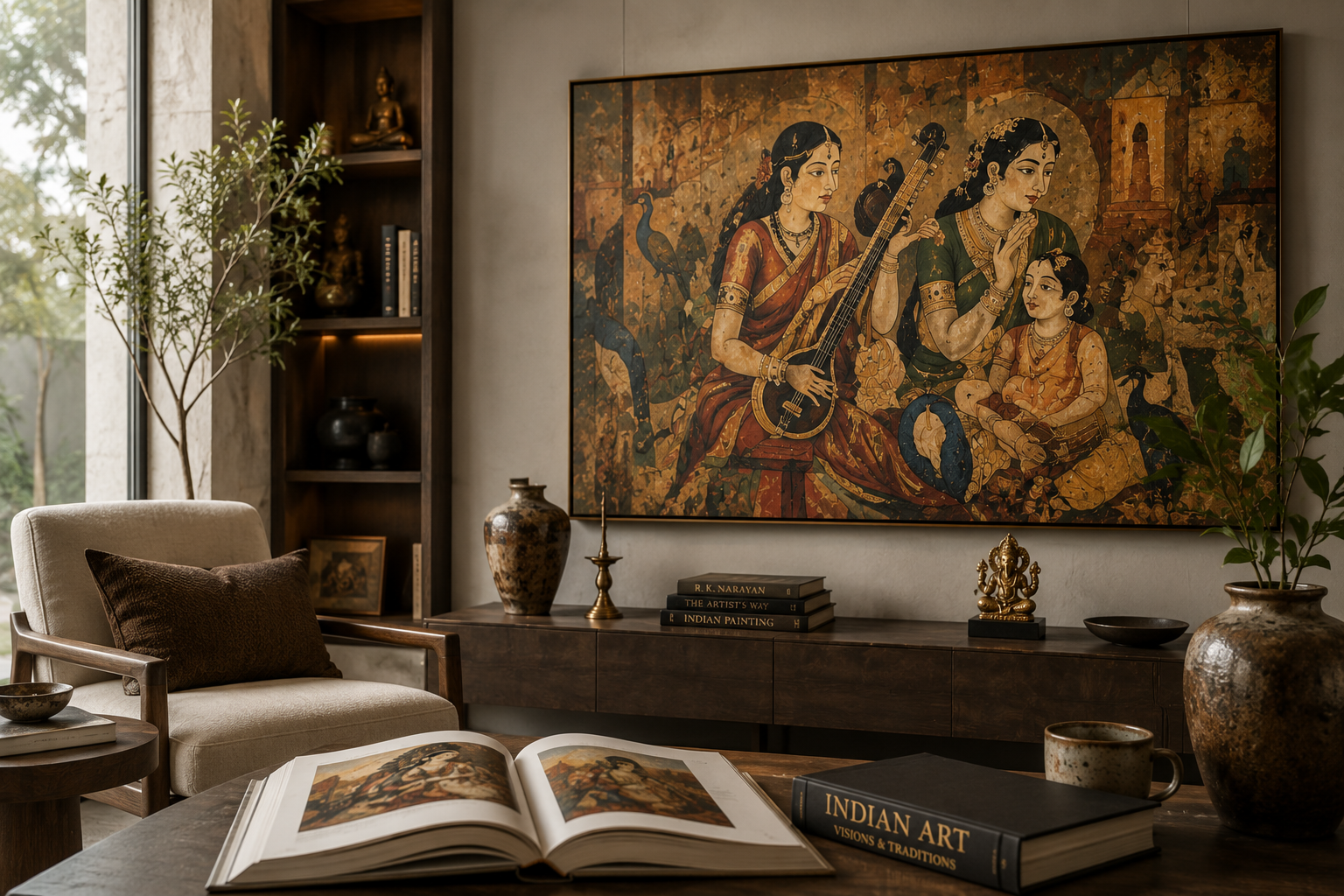
Original art should belong to the space—not simply fill a wall
Choosing an original painting is different from selecting furniture or decorative accessories. A painting changes the atmosphere of a room, influences how people experience the space, and gradually becomes part of everyday life.
The most meaningful artwork is rarely chosen because it matches a sofa, curtain, or wall colour exactly. It is chosen because it creates a connection—one that continues long after the room has been arranged.
A thoughtful selection brings together practical considerations such as scale and light with something more personal: the feeling that this particular work belongs in this particular place.
“Collectors do not simply own original art. They live with it.”Ceramic Raja Studio
A thoughtful way to choose artwork for a real space
Begin with emotion
Before considering size or colour, decide what the room should feel like. A living room may invite warmth and conversation, a bedroom may need quietness, and an office may benefit from energy and focus.
Study the wall and furniture
Measure the usable wall area and consider the width of the furniture below it. The artwork should feel connected to the space rather than floating without visual support.
Observe the light
Watch how daylight moves through the room. Soft indirect light can reveal texture beautifully, while harsh direct sunlight may cause long-term fading and should be avoided.
Allow breathing room
Strong artwork does not need to compete with too many nearby objects. Give the painting enough open space so its colour, form, and rhythm can be experienced clearly.
Choose personal connection
The most successful choice is often the work that continues to hold your attention. Technical fit matters, but an artwork should also feel personally meaningful enough to live with for years.
Begin with the feeling you want to create
Every room has a purpose. A living room invites conversation. A dining area encourages gathering. A study supports concentration, while a bedroom should feel calm and restorative.
Instead of beginning with the question, “What colours match this room?” begin with, “How should this room make me feel?” That answer often leads more naturally toward the right work.
Warm earth tones can create comfort and familiarity. Rich blues may introduce stillness. Bold compositions can energise an office, while quieter figurative works encourage reflection.
Scale matters more than people expect
One of the most common mistakes is choosing artwork that is too small for the wall. A large wall usually needs visual presence, while a compact space may benefit from one confident work rather than many unrelated pieces.
Above a sofa or console, the artwork should feel connected to the furniture below it. Vertical compositions work well in hallways and narrow walls, while wider pieces can bring balance to dining and living spaces.
Good scale does not mean choosing the largest possible work. It means choosing a size that allows the painting to hold the wall without overwhelming the architecture around it.
Light changes the way a painting is experienced
Original paintings respond to changing light throughout the day. Morning light may reveal cooler notes, while evening light can deepen warmth and texture.
Place artwork where it receives soft or indirect natural light. Harsh direct sunlight should be avoided because prolonged exposure may affect pigments and surface materials over time.
In the evening, a focused but gentle wall light can help the painting retain presence without creating glare or flattening its texture.
Give the artwork room to breathe
Original art does not always need elaborate styling around it. Too many decorative objects, frames, or competing colours can weaken the impact of a strong painting.
Leave enough open wall around the work. This breathing space allows the eye to pause and helps the artwork establish its own visual identity.
A simple arrangement often feels more considered than an overcrowded one. Let the artwork become the focal point rather than one more element in the room.
Personal connection should guide the final decision
Practical guidance helps narrow the choice, but the final decision should still feel personal. Spend time with the work. Return to it more than once. Notice whether it continues to hold your attention.
The strongest connection often develops slowly. A painting may reveal new relationships between colour, form, and texture each time it is viewed.
Over years, the artwork becomes associated with routines, conversations, celebrations, and quiet moments. It stops feeling like an object placed in the room and begins to feel like part of the room’s identity.